


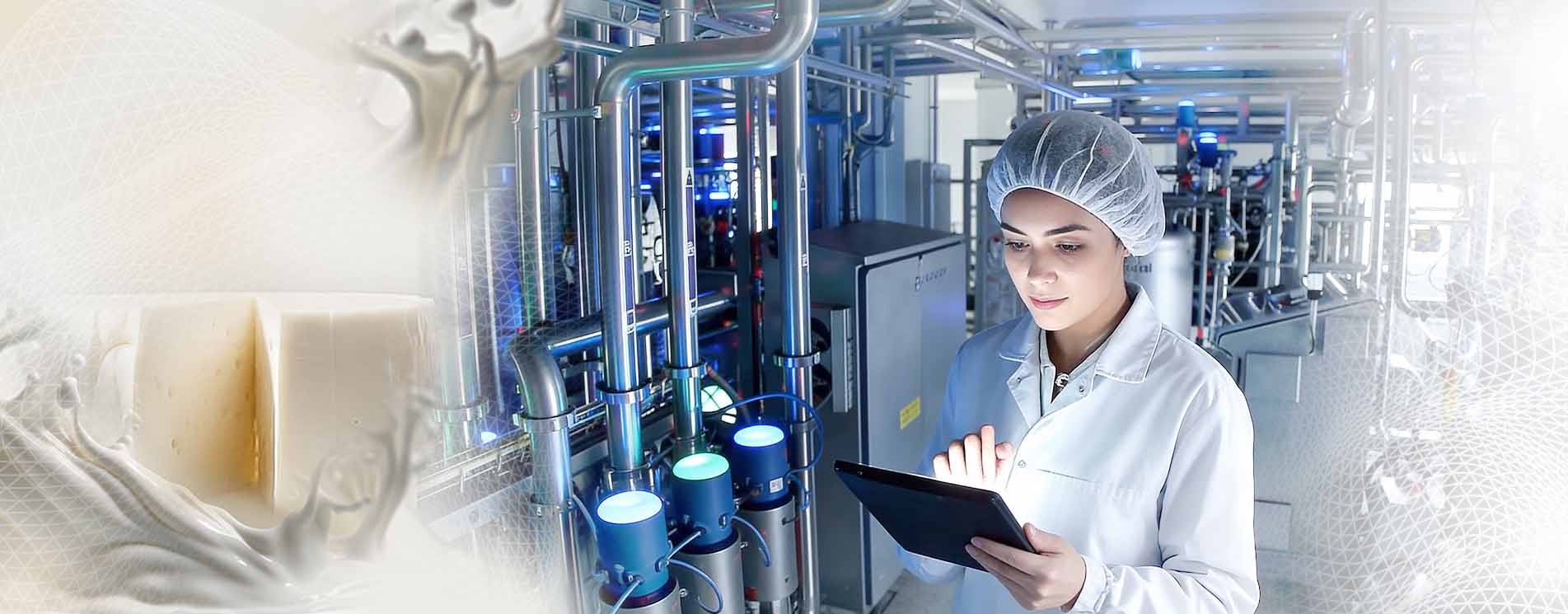
Comprehensive solutions for cheese production
30/04/2026
ProcessesTogether with our partner TECNICAL, we offer complete plants for the production of fresh and pressed cheeses as well as specialised equipment for reception and storage operations, sanitisation, pasteurisation, transfer, curding, moulding, salting and cleaning.
This collaboration allows us to provide a complete and adaptable technological solution.
Both companies share a firm commitment to flexibility, solution customisation and optimisation of production processes, incorporating the criteria of innovation, energy efficiency and guaranteed hygiene throughout all stages.
Within this framework, INOXPA handles and manages the liquid phase of the process - that is, the treatment and distribution of milk - while TECNICAL contributes its expertise in the solid product domain, starting from coagulation, thus offering a fully integrated solution for the cheese industry.
Cheese-making process
The cheese-making process comprises a series of clearly defined phases covering the initial treatment of the milk, coagulation, curd processing and handling, and the consecutive stages of salting and maturing the cheese.
Milk reception and storage
The milk is received and stored in tanks designed to keep it at a temperature of approx. +4ºC. The tanks have a continuous agitation system.
Sanitisation
During reception, and before storage, the milk can undergo a clarification process that eliminates impurities to ensure an ideal starting point.
Pasteurisation
The milk undergoes a high-temperature short-time (HTST) treatment to guarantee microbiological safety and to optimise conditions for curding.
Standardisation of fat content
Skimming centrifuges regulate fat content in milk to meet the specific requirements for the type of cheese being made.
Transfer to curding vats
Once pasteurised, the milk is transferred to curding vats. There, the required ingredients – lactic cultures, calcium chloride, rennet – are added using precise dosing systems.
Curding, cutting and stirring of the curd
During this phase, the milk is converted into curd. The curd is then cut and it undergoes controlled stirring to regulate the expulsion of whey from the curd, which primarily determines the texture and moisture of the product.
Moulding and pressing
The curd is placed into moulds and is pressed to eliminate residual whey, shape the cheese, compact the curd and define the final texture.
Salting system
Cheese is primarily salted by immersion or flotation in brine, dry salting, rubbing salt onto the rind, or salting the curd directly before molding. The method and amount of salt depend on the type of cheese: soft and blue cheeses usually require dry salting or a mild brine, whereas hard cheeses require longer immersion in brine.
Plant cleaning using CIP systems
Once the process is complete, the skids undergo automatic cleaning using CIP systems to ensure optimal levels of hygiene and food safety.
Overall, the integration of advanced technological solutions and the coordination between INOXPA and TECNICAL make it possible to cover all stages of the cheese-making process in a complete and efficient manner. This comprehensive approach not only ensures the quality of the final product, but also provides a high degree of flexibility, ensuring reliable processes aligned with current standards in the cheese industry.
Contact
Other news
-
 23/07/2026
Upgrading our RF flexible impeller pump
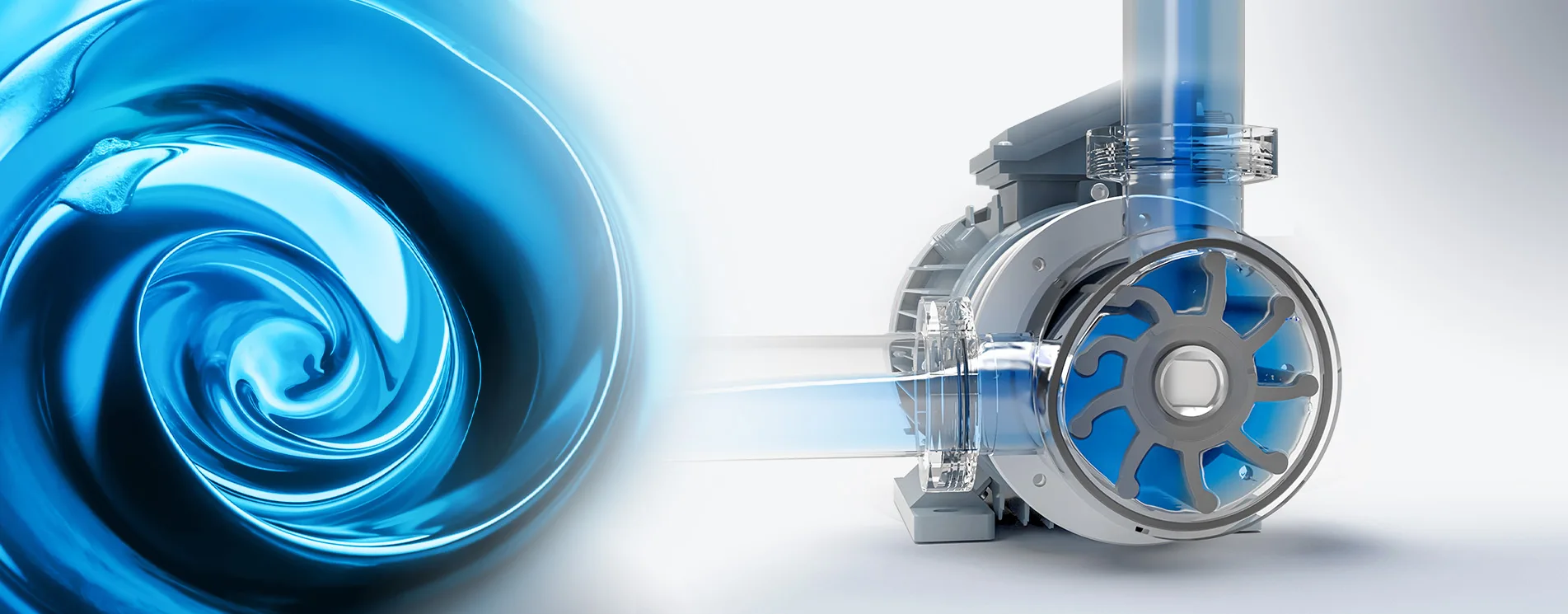
INOXPA have upgraded the RF flexible impeller pump with new optimisations that further enhance its performance, reliability and adaptability for industrial applications.
Pumps -
 28/05/2026
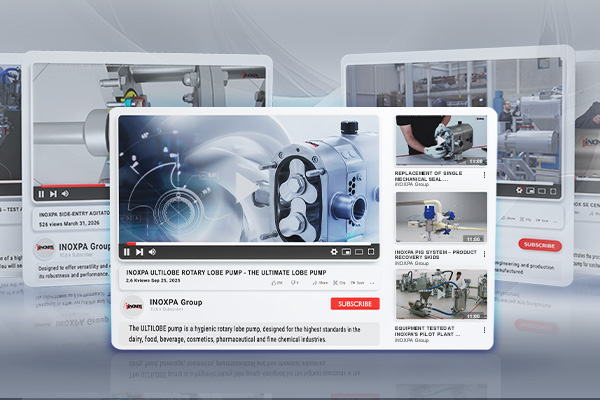
INOXPA’s YouTube channel: technical knowledge and industrial solutions
Explore technical content about industrial processes on INOXPA’s channel: demonstrations, animations, maintenance and tests at the Pilot plant.
-
 31/03/2026
DINAMIX SMX side-entry agitator: new options
With the addition of these new sealing options, the DINAMIX SMX side-entry agitator delivers greater flexibility and value.
Mixing

